Toy industry in Nordics - statistics & facts
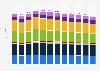
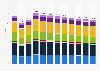
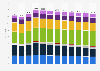
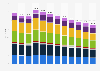
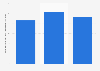
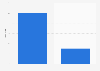
The toy industry is one that grows on an annual basis and constantly evolves due to new technology and emerging trends. In the Nordics, the domestic toy markets are no different in this regard; however, the countries differ substantially from one another. Their collected revenue of around 1.38 billion euros in 2025 is projected to lower in all types of toy categories, with the exception of card and board games.
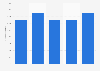
This differed for Denmark, as the market observed a higher export value over imports. The country’s strength in producing toys for a global market is directly contributed to internationally recognized LEGO. The export value of toys from Denmark has reached nearly 340 million Danish kroner. Meanwhile, imports have been on a steady rise, now exceeding 310 million Danish kroner.
The toy industry in the Nordic countries is consistently evolving, reflecting their capacities for consumption and production. Domestic producers and wholesalers are prominent, with LEGO being a key international producer.
The market size is measurable through foreign trade values
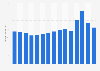
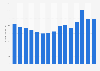
The market for baby carriages, toys, games, and sporting goods illustrates a striking trade imbalance in Norway and Finland, with the import value outweighing the exports. Norway’s import value for these products reached over 7.6 billion Norwegian kroner, while the imports from Finland accumulated over 420 million euros. Thus, consumer demand within the countries cannot be entirely fulfilled by domestic supply. In contrast, while Sweden has a dominant import market, totaling 14.2 billion Swedish kronor, it also maintains a considerable export market valued at 9.2 billion Swedish kronor for baby carriages, toys, games, and sporting goods.This differed for Denmark, as the market observed a higher export value over imports. The country’s strength in producing toys for a global market is directly contributed to internationally recognized LEGO. The export value of toys from Denmark has reached nearly 340 million Danish kroner. Meanwhile, imports have been on a steady rise, now exceeding 310 million Danish kroner.
LEGO
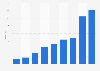
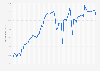
For years, LEGO has consistently been the top ranked toy company in the world based on revenue, ahead of companies such as Bandai Namco, Mattel, and Hasbro. LEGO is a Danish toy production company and brand headquartered in Billund. Besides manufacturing LEGO-branded toys, the group operates several amusement parks across the globe (e.g., LEGOLAND Resorts) as well as their own retail stores. Since 2018, the company's revenue has increased with each and every year, peaking at more than 74 billion Danish kroner in 2024. This is a growth of 68 billion Danish kroner in revenue in the past two decades.The toy industry in the Nordic countries is consistently evolving, reflecting their capacities for consumption and production. Domestic producers and wholesalers are prominent, with LEGO being a key international producer.